Search "pounds to dollars" and Google hands you a neat number. Walk up to a currency desk, and you'll be quoted a different one. The gap between the two is where your money quietly disappears.
It's rarely a single fee. It's a margin tucked inside the exchange rate itself, a "zero commission" sign that isn't quite what it seems, or one innocent-looking button on a card machine. This guide shows you where the leaks are and how to plug them.
The short version: Compare every offer to the mid-market rate, plan ahead rather than exchanging at the airport, and always choose to pay in the local currency when a machine asks.
First, know the number that matters: the mid-market rate
The mid-market rate is the midpoint between what buyers and sellers will pay in the currency markets. It's the figure you see when you search GBP to EUR on Google or XE, and it's the benchmark for judging any provider.
Providers make money by adding a margin to that rate, by charging fees, or both. A provider can advertise "no commission" and still take a cut through a weaker rate. So don't compare fees. Compare the total amount you'll actually receive.
The UK's financial regulator has made the same point for international money transfers. The Financial Conduct Authority's good and poor practice guidance says firms should explain clearly when a quoted rate includes a markup, and it flags as poor practice implying a transaction is "zero cost" when a markup applies. That guidance covers international transfers rather than travel cards or cash machines, but the lesson carries over: look for the total, not the headline fee.
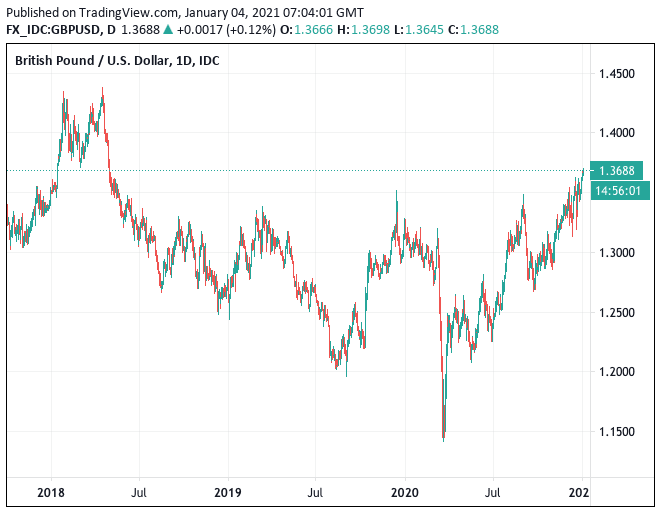
Recent context: Bank of England reference rates show pounds trading between 1.3160 US dollars (14 October 2026) and 1.3387 (20 and 23 October 2026) across the 30 days to 23 October 2026. Rates move daily, so check a live converter before you decide anything.
What a small margin really costs you
These figures are an illustration, not a quote from any provider. They use a round rate of £1 = $1.33 and show how the margin changes what you receive on £1,000.
| Provider margin below the mid-market rate | You receive | Lost compared with mid-market |
|---|---|---|
| 0% (the mid-market rate) | $1,330.00 | $0.00 |
| 1% | $1,316.70 | $13.30 |
| 5% | $1,263.50 | $66.50 |
Same pounds, same day, and a $66 difference. That's a decent dinner, which is why the next sections matter.
How much your method really matters
MoneySavingExpert's travel money guide puts real numbers on this. In its worked example of buying $1,000, the cost in pounds varied a lot depending on how you paid.

What $1,000 cost in pounds by payment method, from MoneySavingExpert's worked example (guide updated 28 August 2026). Your own costs will vary with the rate and your provider.
The cheapest options in that example, a specialist overseas card or prepaid card, cost about £740. Airport cash cost about £909. That's roughly £169 more for the same dollars.
Where to exchange pounds, and what to watch for
1. Airport bureaux de change: convenient, usually costly
Airport desks typically apply wider margins, so you may get noticeably fewer euros or dollars for the same pounds. They earn that premium by being the last-minute option. If you arrive somewhere without local cash, a cash machine is often a better fallback than a desk.
2. Ordering ahead online or at the Post Office
Ordering online often beats walking in, and online rates can be better even with the same provider. Check for delivery fees and minimum spends. Click-and-collect can lock in the online rate. Work out the total cost before you order. MoneySavingExpert suggests comparing cash rates in the UK using its TravelMoneyMax tool.
3. Your debit or credit card: where the fees hide
Cards are widely accepted in major cities, but less so in rural areas and markets, so carry a little cash too. The catch is your card's foreign fees. MoneySavingExpert says most cards add a load of about 3% on top of the Visa or Mastercard rate, while the top specialist overseas cards charge no spending fees. Some debit cards also add a charge per transaction. Check your own card issuer's official foreign transaction fee information before you travel, as terms differ between providers and change over time.
4. Cash machines abroad
Handy, but they can offer a poorer rate than a card or pre-ordered cash. MoneySavingExpert notes that cash withdrawal charges are usually around 2.5% of the amount with a minimum of about £3, and that overseas machines and banks can add their own fees. Larger, less frequent withdrawals are usually cheaper than many small ones. Avoid withdrawing cash on a credit card, which usually brings fees and interest.
The one button that costs people money: "Pay in pounds?"
Abroad, a card machine or cash machine may ask whether you want to be charged in pounds or in the local currency. It sounds helpful. It isn't. This is called dynamic currency conversion, and paying in pounds gives the machine's operator control of the conversion, which usually means a worse rate.
Always choose the local currency. Your own bank or card provider will then do the conversion at its rate, which you can compare in advance.
Does your destination change the best option?
Yes, to a degree. The same principles apply everywhere, but the practical choices shift with where you're going.
The Eurozone. The euro is used across 21 EU member states, so one currency covers many trips, and cards are widely accepted in major cities. A fee-free travel card plus a small amount of cash for markets and rural areas works well for many people. If you're buying euros before you go, compare online rates and the total you'll receive.
The United States. Card payments are very common, so many travellers need less cash than they expect. That makes your card's foreign fees the main number to check. The $1,000 example above shows how much the choice of card or cash can matter in dollars.
Other destinations. Less common currencies can be harder to buy in the UK, and bureau rates can vary more. MoneySavingExpert notes that if you're using a specialist card for cash, it's generally better to withdraw once you're abroad. Check whether the currency is available before you go, and keep a backup card.
A simple checklist before you exchange anything
- Check the mid-market rate on Google or XE so you know your benchmark.
- Ask for the total amount you'll receive, not just the fee or commission.
- Compare at least two or three options, including your own bank and an online provider.
- Order ahead if you want cash, rather than exchanging at the airport.
- Check your card's foreign fees and carry a backup card.
- Choose the local currency whenever a machine offers to convert for you.
- Keep a little cash for markets, rural areas, and tips.
Frequently asked questions
What is the mid-market rate?
The midpoint between the buy and sell prices in the currency markets, and the benchmark for judging any provider's rate.
Is "zero commission" really free?
Not necessarily. A provider can build its margin into a weaker exchange rate. Compare the total you'll receive.
Should I exchange money at the airport?
Usually not, if you can avoid it. Airport desks typically apply wider margins, and MoneySavingExpert's example shows airport cash as the most expensive option.
Should I pay in pounds or local currency abroad?
Choose the local currency. Paying in pounds through a machine's own conversion usually means a worse rate.
How often do exchange rates change?
Constantly. Rates move through the day, so always check a live rate before you decide.
Sources and notes
- Exchange-rate data: Bank of England daily spot exchange rates against sterling. The GBP/USD range quoted above covers 24 September to 23 October 2026, as compiled in Pound Sterling Live's Bank of England historical table.
- Costs by payment method, card fees, cash withdrawal fees, and local-currency advice: MoneySavingExpert travel money guidance (page updated 28 August 2026). The £740 to £909 comparison is MoneySavingExpert's example and will change with rates and providers.
- Pricing transparency: Financial Conduct Authority, Consumer Duty: International payment pricing transparency, good and poor practice. This covers international transfers, not travel cards or cash machines.
- Airport desks, online ordering, cards, cash machines, mid-market rate, and dynamic currency conversion: Wise, How to buy euros in the UK for your next trip (published 19 June 2026). Wise is a currency provider that promotes its own card, so check any provider's current fees and terms.
- Card fees: check your own card issuer's official foreign transaction fee information.
The margin table is an illustration, not a quote. This article is for general information and is not financial advice.