
If you've just been prescribed Lyrica 75 mg, or you're a few days in and feeling dizzy, sleepy or strange, you want straight answers: which side effects are normal, which are warning signs, how long they last, and whether you can just stop. This guide covers the side effects of Lyrica (pregabalin) 75 mg capsules in plain language, using the FDA-approved prescribing information. It is general education, not medical advice, and it does not tell you how much to take.
Side effects of Lyrica 75 mg in one line: the most common are dizziness, sleepiness, dry mouth, swelling in the hands or feet, blurred vision, weight gain and trouble concentrating. Serious reactions are less common but include swelling of the face or throat, breathing problems (especially with opioids or other sedatives), mood changes and suicidal thoughts, and withdrawal problems if you stop suddenly.
If you have swelling of the face, lips, tongue or throat, trouble breathing, a severe rash, or a seizure, get emergency help now. In the U.S., call 911. For thoughts of suicide, call or text 988 right away, and call 911 if someone is in immediate danger. New or worsening mood changes are a reason to contact your prescriber the same day.
Quick answer: Lyrica 75 mg side effects
| What it looks like | How common | |
|---|---|---|
| Common | Dizziness, sleepiness, dry mouth, swelling of hands and feet, blurred vision, weight gain, trouble concentrating | Reported by 5% or more of people in label trials (across doses and conditions, not only 75 mg), at least twice as often as placebo |
| Also reported | Fatigue, headache, nausea, tremor, vertigo, double vision, confusion | Led some people to stop treatment in trials |
| Serious (less common) | Angioedema (swelling of face, mouth, throat), severe allergic reactions, slowed breathing, suicidal thoughts, worse seizures after stopping suddenly | Rare, but need urgent action |
The Lyrica prescribing information lists the most common adverse reactions as dizziness, somnolence, dry mouth, edema, blurred vision, weight gain, and "thinking abnormal," which is primarily difficulty with concentration and attention.

Figure 1. The most common Lyrica side effects, based on the FDA-approved label.
Common side effects
These are the side effects most often reported in clinical trials of Lyrica (pregabalin):
| Side effect | What it can feel like |
|---|---|
| Dizziness | Lightheadedness or unsteadiness, especially when standing or at the start of treatment |
| Sleepiness (somnolence) | Drowsiness or feeling slowed down during the day |
| Dry mouth | A dry or sticky mouth |
| Swelling (edema) | Puffiness in the hands, feet or lower legs |
| Blurred vision | Trouble focusing, and for some people double vision |
| Weight gain | Gradual weight increase while taking it |
| Trouble concentrating | "Brain fog" or difficulty with attention and thinking |
Other reactions that led at least 1% of Lyrica-treated patients in trials to stop, and at least twice as often as placebo, were weakness (asthenia), double vision (diplopia), nausea, tremor, vertigo, headache and confusion. Dizziness and sleepiness were the reasons most often given for stopping.
Important: these clinical-trial figures describe Lyrica treatment overall, not exclusively people taking 75 mg capsules. Your individual risk can vary depending on your total daily dose, kidney function, other medicines, and personal response.
Keep in mind that a long list of possible side effects does not mean you will get them. Many people have none or only mild ones. If you do notice something, note when it started and how bad it is, and tell your prescriber.
Does the 75 mg strength change side effects?
A "75 mg" label describes the strength of one capsule. It is not by itself a dose. Your prescriber decides your total daily dose, how it is split up, and when to change it, based on your condition and your kidney function. Side effects depend on that whole picture, not on the capsule size alone.
What the label does say: dizziness and sleepiness generally begin shortly after starting Lyrica and occur more frequently at higher doses. So people on lower total doses tend to report fewer of them, but individual reactions vary a lot. Do not change how much you take on your own because of side effects. Call your prescriber or pharmacist first.
How long do Lyrica side effects last?
There is no single timeline. The label gives some useful clues:
- Dizziness and sleepiness usually start soon after treatment begins or after a dose increase.
- In short-term controlled studies, among people who reported them, dizziness lasted until the last dose in 30% and sleepiness in 42%. In other words, for many people these effects fade, but for a sizable minority they persist for as long as the medicine is taken.
- Swelling and weight gain can develop over weeks to months of treatment.
If a side effect is not improving, is affecting your daily life, or is getting worse, ask your prescriber whether a change is appropriate. Do not stop suddenly (see below). Find out more about this item
Serious side effects and warning signs
Most side effects are mild, but a few need urgent action. The Lyrica label warns about:
Immediate emergency (call 911 or your local emergency number):
| Warning | What to watch for | What to do |
|---|---|---|
| Angioedema | Swelling of the face, mouth (tongue, lips, gums) and neck (throat). It can be life-threatening and may make breathing hard | Stop taking it and get emergency care |
| Severe allergic (hypersensitivity) reaction | Hives, blistering or spreading rash, wheezing, trouble breathing | Stop taking it and get emergency care |
| Respiratory depression | Slow or shallow breathing, extreme sleepiness, being unable to wake someone | Call emergency services |
| Seizure | A seizure, including after stopping Lyrica quickly | Call emergency services |
| Imminent risk of self-harm | A person who may act on thoughts of suicide right now | Call 911; call or text 988 for crisis support |
Urgent medical contact (call your prescriber the same day):
| Warning | What to watch for | What to do |
|---|---|---|
| Mood changes | New or worsening depression, anxiety or agitation, or unusual changes in behavior | Contact your prescriber promptly. If you have thoughts of suicide, call or text 988 right away |
| Persistent or worsening side effects | Dizziness, sleepiness, swelling, vision changes or weight gain that are not improving or are affecting daily life | Contact your prescriber or pharmacist. Do not stop suddenly |
| Withdrawal after stopping | Insomnia, nausea, headache, anxiety, sweating or diarrhea after stopping or missing doses | Contact your prescriber. Call 911 for a seizure |

Figure 2. Emergency signs vs signs that need urgent contact with your prescriber.
If you think someone has taken too much Lyrica, or is unusually sleepy or hard to wake, treat it as an emergency. In the U.S., call 911 or Poison Help at 1-800-222-1222.
Breathing problems, opioids and alcohol
In December 2019 the FDA warned that serious breathing problems can occur with gabapentinoids, including pregabalin (Lyrica and Lyrica CR). The risk is higher in people who:
- Use opioid pain medicines or other drugs that slow the central nervous system
- Have breathing conditions such as COPD
- Are older
The FDA also said there is less evidence of serious breathing difficulties when gabapentinoids are taken alone by otherwise healthy people. Other medicines that slow the central nervous system, including opioids, benzodiazepines, sleeping medicines, and certain sedating antihistamines, can increase the risk of excessive sedation and breathing problems. In the label's interaction studies, pregabalin showed additive effects on thinking and movement when it was given with oxycodone, lorazepam or alcohol. Not every antidepressant or antihistamine is equally sedating, so ask your pharmacist whether any of your other medicines could add to the effect. Tell your prescriber and pharmacist about every medicine you take, including over-the-counter products and alcohol use. Watch for increased sleepiness or slowed breathing when you start Lyrica or when your dose changes.
Mood changes and suicidal thoughts
Lyrica belongs to a class of medicines (antiepileptic drugs) that carry a warning about suicidal thoughts and behavior. The risk is small, but it is real enough that the label tells prescribers to monitor patients for new or worsening depression, unusual changes in mood or behavior, and suicidal thoughts. Mood changes are an urgent reason to contact your prescriber the same day, not necessarily an emergency by themselves. If you or someone else is having thoughts of suicide, call or text 988 (in the U.S.) right away, and call 911 if there is immediate danger.
Swelling, weight gain and vision changes
- Swelling (peripheral edema). Lyrica can cause swelling in the hands, feet and legs. Tell your prescriber if you have heart problems, because swelling may need closer attention.
- Weight gain. It is one of the most common side effects. If you have diabetes, weight gain may affect how you manage your diabetes, so mention it to your care team.
- Blurred or double vision. Report vision changes, and avoid driving until you know how Lyrica affects you.
- Dizziness and sleepiness. Lyrica can impair your ability to drive or operate machinery. Wait until you know how it affects you.
Who is at higher risk?
| Group | Why it matters |
|---|---|
| Adults taking opioids, sedatives or other CNS depressants | Higher risk of slowed breathing |
| People with COPD or other breathing problems | Higher risk of breathing difficulty |
| Older adults | Higher risk of breathing problems and of dizziness or sleepiness-related falls |
| People with kidney problems | Kidney function affects how the medicine is cleared, so dosing is adjusted by the prescriber |
| People with heart problems | Swelling may need monitoring |
| People with diabetes | Weight gain may affect diabetes management |
| People with a history of depression or suicidal thoughts | Mood symptoms need monitoring |
| People with a history of substance misuse | Lyrica is a controlled substance with potential for misuse |
Lyrica 75 mg from Pfizer vs generic pregabalin
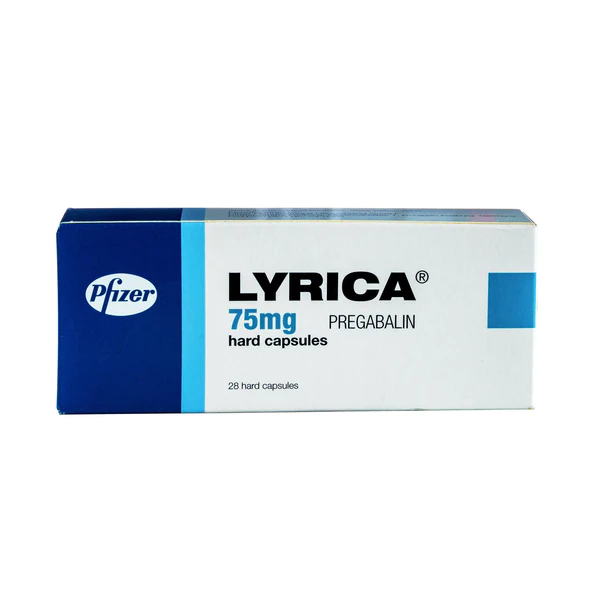
Lyrica is the brand name of pregabalin, made by Pfizer. The FDA approved the first generic versions in July 2019, and generic pregabalin capsules are made in the same range of strengths, including 75 mg. Generics contain the same active ingredient. The pregabalin label and warnings apply to both, so "Lyrica 75 mg Pfizer side effects" and generic pregabalin 75 mg side effects are the same list. Inactive ingredients can differ, so tell your pharmacist if you notice a change after switching.
| Lyrica (brand) | Generic pregabalin | |
|---|---|---|
| Maker | Pfizer | Several approved manufacturers |
| Active ingredient | Pregabalin | Pregabalin |
| Side effects and warnings | Per the Lyrica label | Same labeled side effects and warnings |
| Capsule strengths | Includes 75 mg | Includes 75 mg |
Lyrica CR is a separate extended-release tablet with its own label. Its most common side effects were dizziness, somnolence, headache, fatigue, peripheral edema, nausea, blurred vision, dry mouth and weight gain.
Can I quit Lyrica 75 mg without bad side effects?
This is one of the most common questions people ask, and the answer matters: do not stop Lyrica suddenly. The label says increased seizure frequency or other adverse reactions may occur if Lyrica is stopped rapidly, and that it should be withdrawn gradually over a minimum of 1 week. That applies even if you take a lower dose or take it only once a day.

Figure 3. Stopping suddenly vs tapering. The diagram is schematic and contains no doses.
Withdrawal after stopping quickly can include insomnia, nausea, headache, anxiety, sweating and diarrhea, and in people with epilepsy, more seizures. The safest approach is to talk to your prescriber before you stop or reduce Lyrica for any reason, including side effects. They can set a taper plan that fits you. If you have already stopped and feel unwell, call your prescriber or pharmacist. For emergencies, such as a seizure, call 911.
Misuse, dependence and "Is Lyrica bad for you?"
Pregabalin is a Schedule V controlled substance in the U.S. The FDA describes that as a lower potential for abuse among scheduled drugs, but it may lead to some physical or psychological dependence. The FDA has also noted growing misuse of gabapentinoids, often together with opioids, which raises the risk of dangerous breathing problems.
So, is Lyrica bad for you? It is neither automatically harmful nor automatically harmless. For many people with nerve pain, fibromyalgia or seizures, it provides real relief. It also has real risks: sedation, swelling, weight gain, mood warnings, breathing risks with certain combinations, and withdrawal problems if stopped suddenly. The safest use is exactly as prescribed, with an open conversation with your prescriber about benefits, side effects and alternatives. Never take it with opioids or other sedatives unless your prescriber has specifically planned for that, and don't share it.
What is Lyrica used for, and what does it do?
Lyrica (pregabalin) is FDA-approved for several conditions, including:
- Neuropathic pain associated with diabetic peripheral neuropathy
- Postherpetic neuralgia (nerve pain after shingles)
- Fibromyalgia
- Neuropathic pain associated with spinal cord injury
- Adjunctive therapy for partial-onset seizures
Pregabalin is an antiepileptic drug. It is thought to ease nerve pain by calming overactive nerve signaling, though its exact mechanism is not fully understood. It does not cure the underlying condition. Some doctors prescribe it for other uses, which are off-label.
What to do about side effects
- Don't change the dose or stop on your own. Call your prescriber or pharmacist first.
- Write down what you notice, when it started, and how strong it is.
- Be careful with driving and machinery until you know how Lyrica affects you.
- Avoid alcohol and other sedatives unless your prescriber says otherwise.
- Report serious side effects to your prescriber, and consider reporting them to the FDA's MedWatch program.
- Seek emergency care for facial or throat swelling, trouble breathing, a severe rash, or a seizure. Call or text 988 for thoughts of suicide, and contact your prescriber the same day for new or worsening mood changes.
Questions to ask your doctor
- Is Lyrica the right medicine for my condition, and what are the alternatives?
- Which side effects should I expect, and which mean I should call you?
- I take other medicines (or drink alcohol). Is that safe with Lyrica?
- Do my kidney function, heart, diabetes or breathing conditions change anything?
- How will we decide if it is working, and how will we stop it when the time comes?
- If I want to come off it, what is my taper plan?
FAQ
What are the side effects of Lyrica 75 mg? The most common are dizziness, sleepiness, dry mouth, swelling in the hands and feet, blurred vision, weight gain, and trouble concentrating. Serious but less common effects include angioedema, allergic reactions, slowed breathing, suicidal thoughts, and problems after stopping suddenly.
What is the most common side effect of Lyrica 75 mg? Dizziness and sleepiness are the most commonly reported, and the ones that most often led people to stop treatment in trials.
Is the 75 mg dose strong? 75 mg is a capsule strength, not a total dose. Your prescriber determines your total daily dose. Whether a given amount is right for you depends on your condition, your kidney function and how you respond.
Does Lyrica 75 mg cause weight gain? Weight gain is one of the most common side effects. If you have diabetes, it can affect how you manage it, so tell your care team.
How long do Lyrica side effects last? It varies. In short-term studies, among people who reported them, dizziness lasted until the last dose in 30% and sleepiness in 42%. Tell your prescriber if side effects don't improve.
Can I drive on Lyrica 75 mg? Lyrica can cause dizziness and sleepiness that impair driving. Don't drive or operate machinery until you know how it affects you.
Can I drink alcohol with Lyrica? Lyrica can add to the effects of alcohol and other sedatives, so ask your prescriber before drinking.
Can I quit taking Lyrica 75 mg once a day without bad side effects? Don't stop suddenly. The label says to taper gradually over at least one week, and your prescriber should set the plan, even at lower doses.
What are Lyrica withdrawal symptoms? Stopping quickly can cause insomnia, nausea, headache, anxiety, sweating and diarrhea, and more seizures in people with epilepsy.
Is Lyrica addictive? Pregabalin is a Schedule V controlled substance. It has a lower potential for abuse than more tightly controlled drugs, but can cause physical or psychological dependence and is misused by some people, especially with opioids.
Is Lyrica bad for you? Not automatically. It helps many people but has real risks, including sedation, swelling, weight gain, mood warnings, breathing risks with certain combinations, and withdrawal problems. Use it only as prescribed.
What does Lyrica do? It is an antiepileptic drug used to treat nerve pain, fibromyalgia and certain seizures. It eases symptoms but does not cure the underlying condition.
What is Lyrica used for? Diabetic nerve pain, nerve pain after shingles, fibromyalgia, nerve pain from spinal cord injury, and, with other medicines, partial-onset seizures.
Who makes Lyrica? Pfizer makes the brand-name Lyrica. Other companies make generic pregabalin. Learn more in this article
Is there a generic for Lyrica? Yes. The FDA approved the first generic pregabalin products in July 2019, and generics include 75 mg capsules.
Is Lyrica 75 mg from Pfizer different from generic pregabalin? The active ingredient and labeled side effects are the same. Inactive ingredients can differ.
What should I do if I have swelling of the face or throat? Stop taking it and get emergency care right away. Angioedema can be life-threatening.
Medical disclaimer and editorial policy
Medical disclaimer. This article is for general education and is not medical advice, diagnosis or treatment. It does not replace the advice of your prescriber or pharmacist, and it does not tell you how much of any medicine to take. Never start, stop or change a medicine because of something you read online. In an emergency, call your local emergency number.
Editorial policy. Drug-safety statements in this article are based on the FDA-approved prescribing information, FDA safety communications and other primary sources, which are linked in the Sources section. Statistics from clinical trials are reported as they appear in the label and are not specific to any one capsule strength unless stated. We review the article when the label or FDA guidance changes, and the date at the top shows when it was last updated. Reviewer details are shown at the top of the article.
Sources
FDA labels and safety communications - FDA: Lyrica prescribing information (2025 label on Drugs@FDA) - DailyMed: Lyrica (pregabalin) capsules and oral solution, prescribing information - DailyMed: Lyrica capsules, label information (consumer view) - DailyMed: Lyrica CR (pregabalin) extended-release tablets - FDA label PDF: Lyrica CR (2025) - FDA Drug Safety Communication, 19 December 2019: FDA warns about serious breathing problems with seizure and nerve pain medicines gabapentin and pregabalin - FDA news release: FDA approves first generics of Lyrica (July 2019) - FDA MedWatch: report a side effect
Other - Neurology Reviews: FDA warns gabapentin, pregabalin may cause serious breathing problems - NeurologyLive: FDA approves first generics of Lyrica (strengths including 75 mg) - Pfizer: Lyrica fact sheet (brand maker; generics approved in July 2019) - SAMHSA National Helpline - 988 Suicide and Crisis Lifeline
Sources checked 12 November 2026. I could not open the FDA's 2019 safety communication page directly, so its wording was checked against reproductions of the text; your reviewer should confirm it on fda.gov. A qualified medical reviewer must verify all clinical claims and add their name, credentials and review date before publication.